

UIE Plc
The value investor's path to owning the world's best palm oil plantations
I wanted to share Tactile Fund’s first quarter 2026 letter to partners. Tactile Fund LP continues to invest in companies with extraordinary physical assets that will stand the test of time. We continue to seek partners who share our long-term approach and a desire to own these incredible assets.
Tactile Fund LP Letter to Partners - First Quarter 2026
If you have ever glanced at the nutritional facts label on a packet of snack crackers or read the ingredient list on your dish detergent, you may have noticed a tropical-sounding ingredient: palm oil. Indeed, palm oil finds its way into thousands upon thousands of foods and cleaning products and is a major feedstock for biodiesel. The reason is simple: yield. An acre of palm produces far more oil than a comparable acre planted with soybeans or sunflowers.
When we speak of “palm oil” we are not talking about your stereotypical coconut palms that sustained the island community in Disney’s Moana or the date palms that line the Las Vegas strip. Rather, we mean the African Oil Palm, a species native to Western Africa and now naturalized to similar climates around the world. The oil and kernel meat of the African Oil Palm have been used by humans for thousands of years. Commercial production began in Java in the mid-19th century.
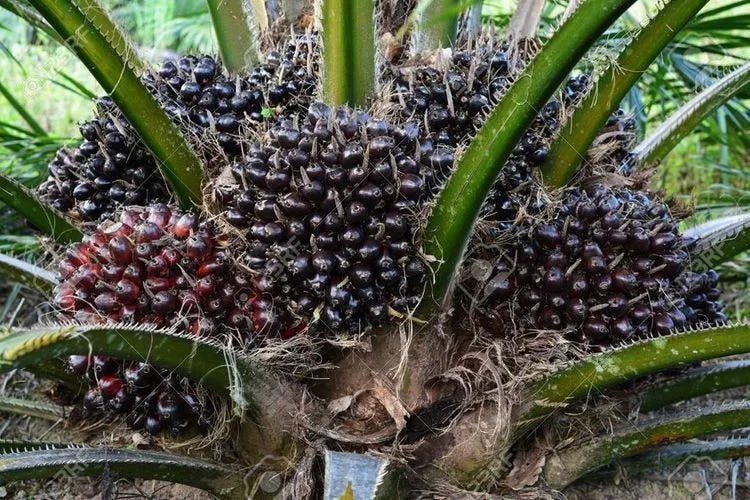
An acre of mature trees can yield over 12 tons of palm oil annually. By tonnage, palm oil accounts for 4% of global agricultural production. It is hard to over-state palm oil’s importance to the global food, consumer products, and renewable energy industries. Demand for palm oil is projected to continue growing at 3-5% annually for years to come. And yet, if you are anything like me, you have never seen an oil palm, let alone a palm plantation, and rarely think of this critical food source and feedstock.
Perhaps this is due in part to palm oil’s decidedly unsavory reputation. Similar to the Amazon region, where slash-and-burn agriculture has resulted in massive loss of Brazilian rainforest, oil palm cultivation has caused terrible deforestation and environmental degradation, especially in Indonesia and Malaysia. Fortunately, world governments have taken steps toward a future in which only sustainably produced palm oil makes its way into world supply chains. While far from perfect, these agreements have had a measurable impact on the sustainability of world palm oil production. With every major palm oil producer pledging not to conduct additional deforestation or build on peatlands (the NDPE or “No deforestation, no peat, no exploitation” pledge) the much-beleaguered orangutan now has a chance. Perhaps a day will come when palm oil sheds its bad reputation almost entirely.
Introducing UIE Plc
The best way we know to invest in the palm oil industry is through holding company UIE Plc. Headquartered in Malta and traded in Copenhagen, UIE is a 48.4% shareholder in one of the world’s largest, most profitable, and most environmentally friendly palm oil producers, United Plantations Berhad. Just how a Malta-based, Copenhagen-traded holding company came to own half of a premier Malaysian palm oil producer is a long and complicated story best explored some other time, or perhaps by reading this extremely dense account? Besides United Plantations, UIE also has an investment portfolio and interests in various venture capital assets. But the large majority of UIE’s value is comprised of United Plantations Berhad, so that is where we will focus.
United Plantations got its start in the early 20th century thanks to an enterprising Danish artillery officer. In its early days, the company produced a variety of commodities including rubber and tea, but gradually gave those up in favor of palm oil. From the beginning, the company’s controlling family valued close cooperation with local management and insisted that young family members wishing to participate in the business spend time in the fields. Company shares were first listed on the Kuala Lumpur Stock Exchange(now the Bursa Malaysia) in 1969.
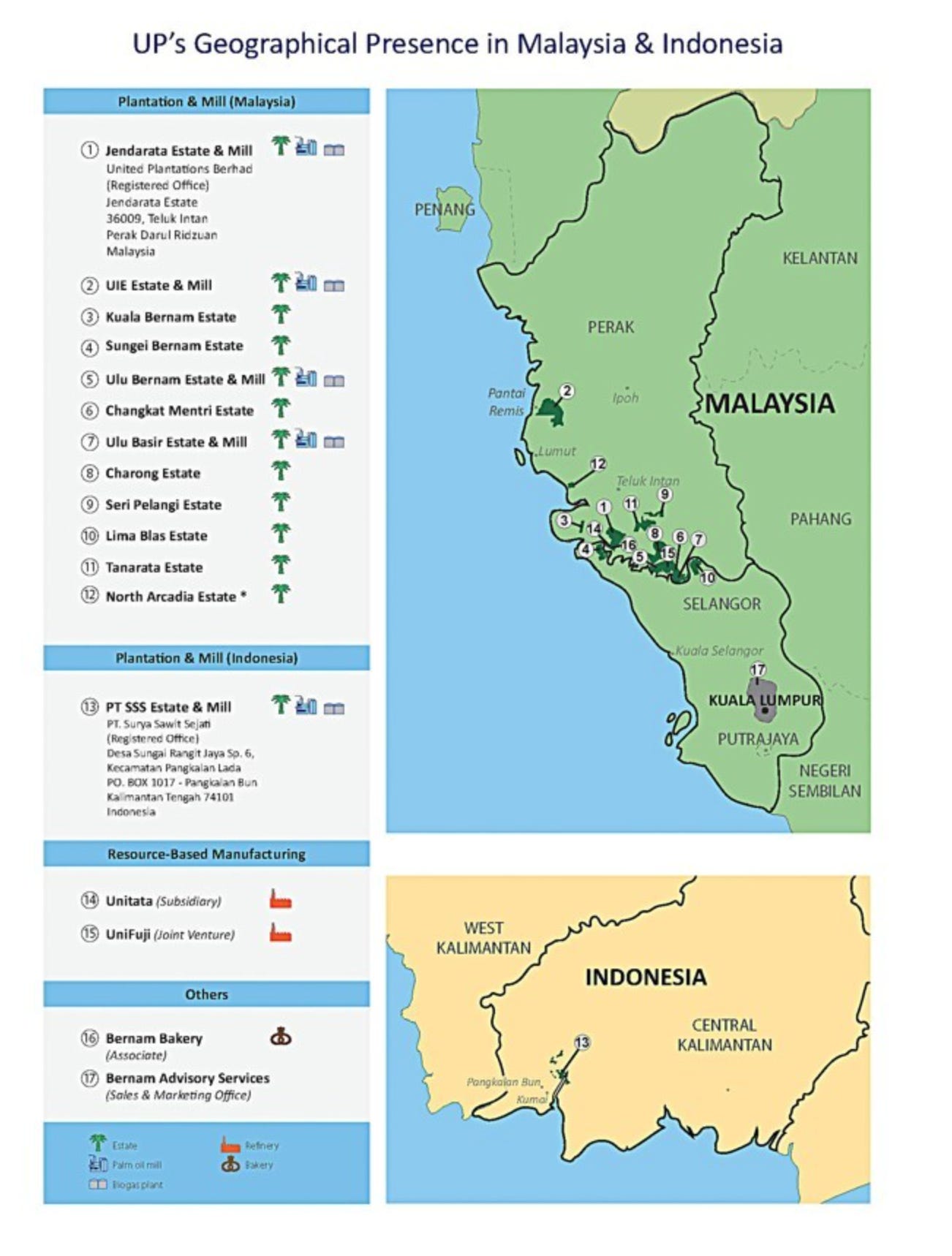
Today, United Plantations owns and operates some 154,000 acres of prime palm plantation land in Malaysia and Indonesia . For context, 154,000 acres is roughly the size of Chicago. For the curious, here is a look at just where the company’s operations are located. Sorry for the slight blur, the source image is low-res.
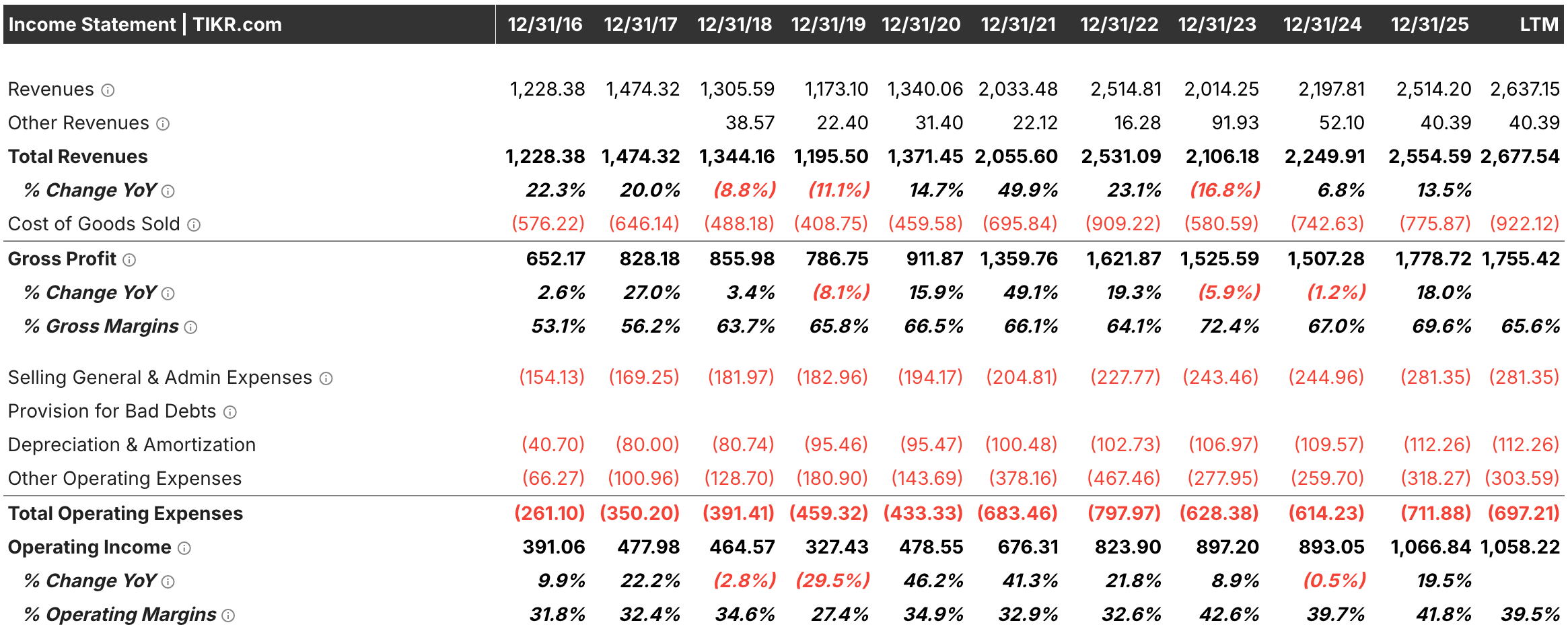
United Plantations’ palm plantations are mature and extremely productive, resulting in one of the highest operating margins in the industry and agricultural sector. Strong palm product pricing and good cost control have allowed operating margins to expand from the low 30%s a decade ago to 40% today.
For decades, United Plantations has prioritized research and development, seeking to reduce waste and improve yields. This focus on efficiency allowed United Plantations to increase the crude palm oil yield of its Malaysian acreage by 30% over the last decade. United Plantations takes a cautious approach to expanding its holdings, which fits with the high importance it places on sustainable palm oil production.
Following a sharp rise after the pandemic, palm oil prices have remained at elevated levels. This pricing environment has allowed UP to earn bumper profits, most of which has been returned to shareholders. Though tight supply conditions suggest prices could persist at this level for the foreseeable future, UP’s position as a cost-advantaged producer should allow it to remain highly profitable in a more normal pricing environment.
Most of the company’s competitive advantage is derived from the plantations themselves, which yield fruit bunches far in excess of industry averages. This advantage is reinforced by UP’s integrated operations in other parts of the value chain:
Breeding: using proven genetic techniques to produce high-yielding plants. Seeds are produced in-house, ensuring quality and cost standards are met. The company is opening a new state-of-the-art seed production facility later this year.
Cultivation: organizing plantations to optimize yield. Seedlings are transferred to fields in well-lined rows, with cover crops planted alongside for field stabilization. A orderly plantation provides space between rows for tractors to broadcast fertilizer, allows for efficient, lower-touch harvesting, and maintains future field productivity. Crucially, cultivation also involves replanting palms, which need to be replaced after approximately 25 years to maintain productivity.
Transportation: a light rail network connects Malaysian plantations with
processing mills, delivering a fresher product and operating at a lower cost compared with trucking or other methods.
Extraction: four mills operated in Malaysia and one in Indonesia. Fruit bunches are delivered to the mills less than a day after harvest, where they are sterilized and screw-pressed to produce crude palm oil (CPO). Other by-products generated are sent for further processing, including use in biogas boilers powering the mills and refineries.
Refining: UP operates two refineries (one via JV), where CPO is refined,
processed, and blended to the edible oils, specialty fats, and other end products that will be delivered to customers.
The end result of generations of painstaking effort in this admittedly unsexy business is some of the world’s most valuable and productive palm oil plantations Given the company’s success, it should not be surprising that UP shares change hands at 24x trailing earnings. The market recognizes the company’s high-quality operations, capable management, and net cash balance sheet. Long-term United Plantations shareholders have seen the value of their investment grow more than twentyfold since 2005.
The Sum of the Parts
At current prices, UIE Plc’s ownership in United Plantations is worth DKK 497 per share. Besides crown jewel United Plantations, UIE also owns small interests in diversified investment and venture capital companies Schörling AB and Greenbridge. UIE owns 1.8% of Schörling, which in turn has stakes in a half dozen technology and industrial companies. UIE owns 9.3% of Greenbridge, which focuses on early-stage advanced technology companies. While important, the value of Schörling and Greenbridge to UIE Plc is only about DKK 57 per share.
Finally, UIE Plc has DKK 13 per share in cash and net “other assets” for a total of DKK 70 per share in non-United Plantations value.
Adding together UIE’s various assets gives a net asset value of around DKK 567 per share. At DKK 347, UIE shares trade at a large discount to net asset value.
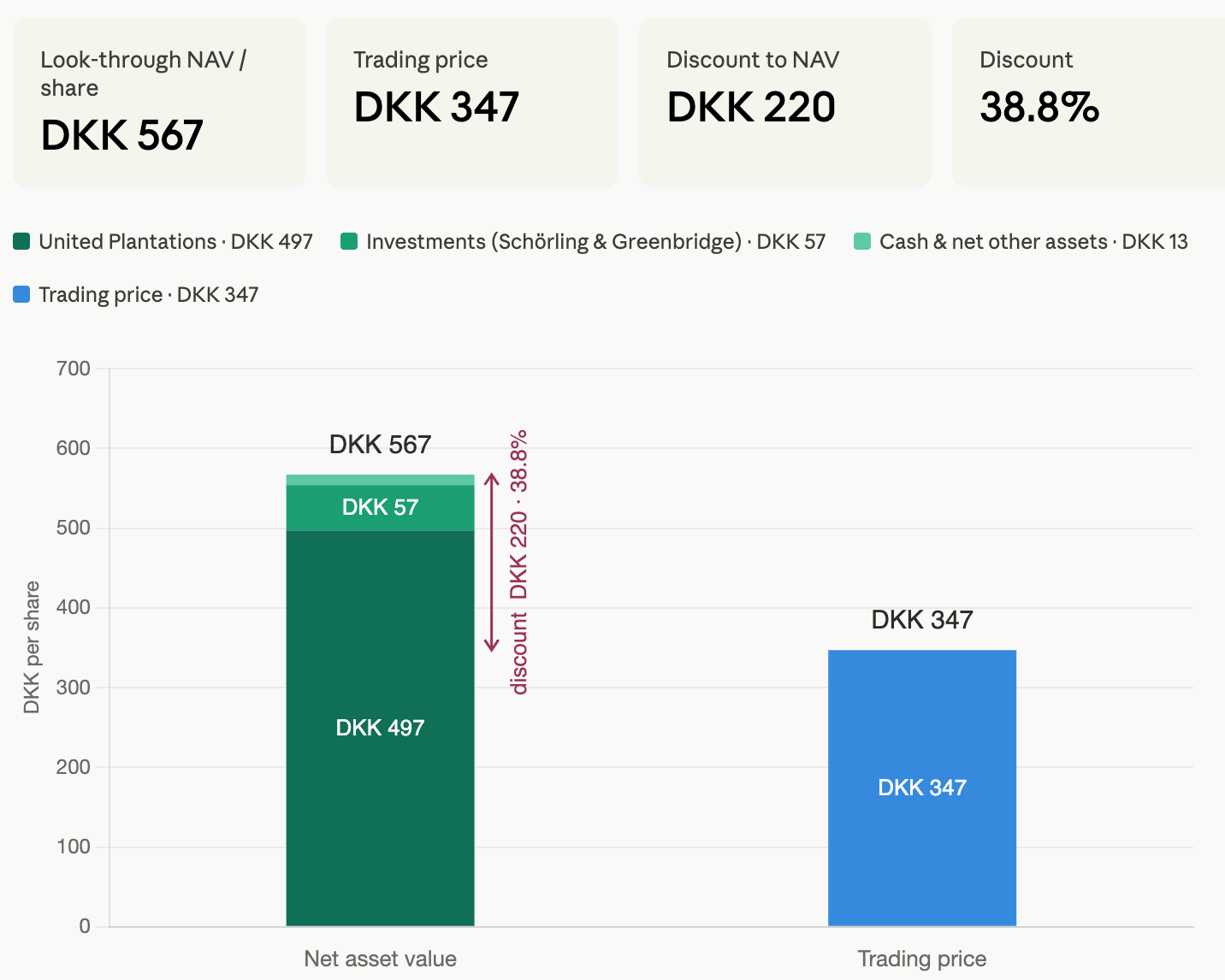
Historically, UIE has traded at discounts in the mid-20% range. This year’s widening discount is somewhat mysterious. While shares of United Plantations are up by a mid-single digit percentage year-to-date, UIE shares have fallen 11%.
At this discount, UIE offers the chance to own United Plantations at a very attractive look-through price. Let’s say UIE’s non-UP assets are worth 85% of NAV, a nice, normal holding company discount. If that is the case, investors today are paying the equivalent of MYR 18.40 per share of United Plantations, valuing one of the world’s best agricultural assets at a trailing P/E of 13.9 and a dividend yield of 6.8%. UIE pays dividends and regularly repurchases shares, actions which could help lessen the discount to net asset value over time.
A unique, durable, and top-quality asset like this is exactly what Tactile Fund seeks to own, especially when acquired at a substantial discount. I expect shareholders will be enjoying the fruits of management’s labor for many years to come.
Tactile Fund owns shares in UIE Plc. The preceding description of UIE Plc and United Plantations Berhad is meant for informational purposes only and is NOT a recommendation to invest in either security. Investing in any security involves risk. Do your own due diligence.
Really enjoyed this. Thank you for sharing. Very interesting.
I'm sure you'll be asked the same question elsewhere, but what's the catalyst for this discount to close ?
Monopsony